


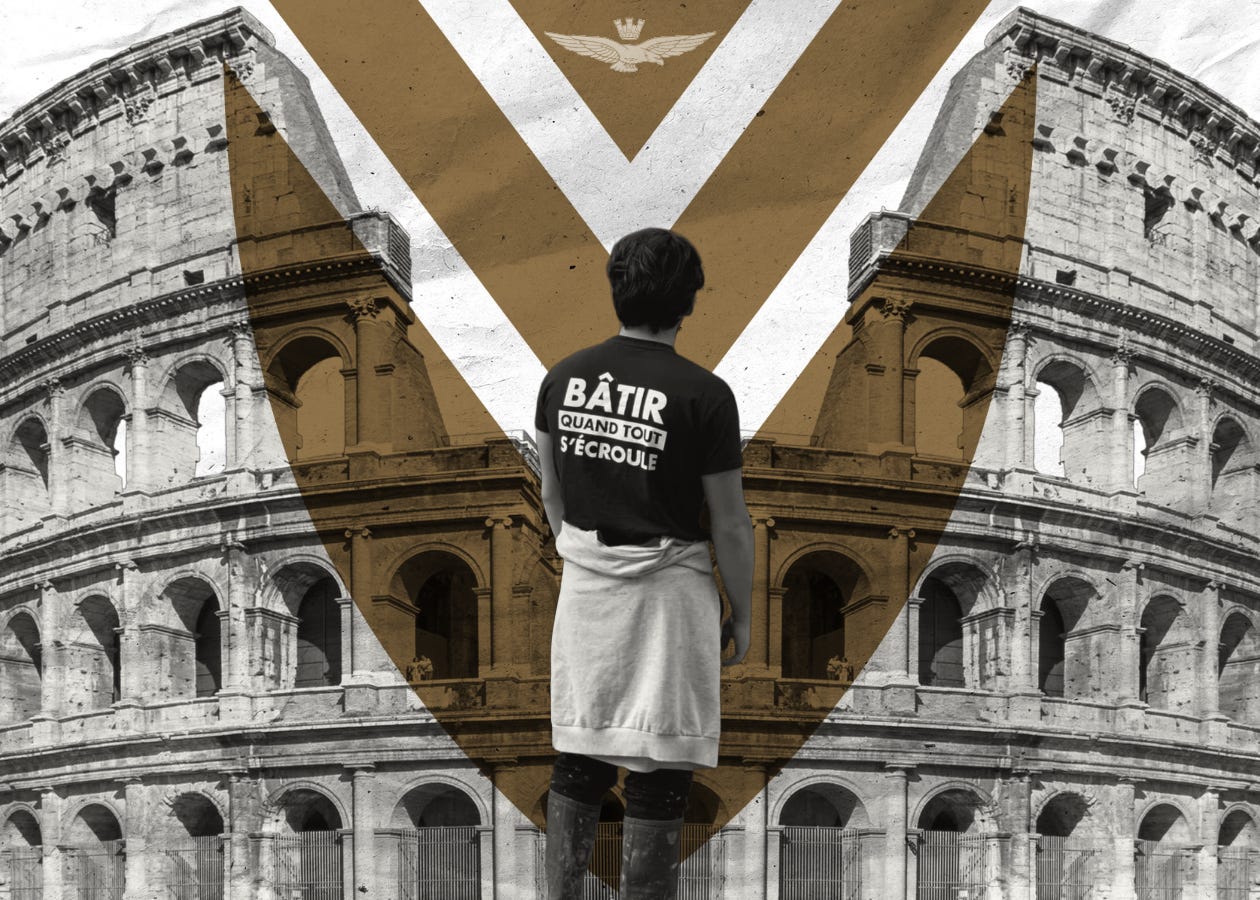
At 23 years old, Raphaël Ayma embodies a new generation of identitarian activists emerging in France and across Europe. Spokesman of Tenesoun, rooted in Provence but connected to a broader continental dynamic, he represents a militant current that blends street activism, metapolitical strategy, intellectual references, and generational radicalism. The death of Quentin Deranque on February 14, following an assault in Lyon, marked a turning point for this movement. For Ayma and many of his comrades, Quentin’s death was not only a tragedy but a political signal — a catalyst accelerating organization, unity, and ideological clarity.
In this interview, Raphaël Ayma reflects on his political awakening, the strategic role of metapolitics, the future of identitarian youth, the question of radicalism, and the Europe his generation intends to shape.
Raphaël, could you introduce yourself to our readers? Who are you, what was your militant awakening, and how did Quentin’s tragedy strengthen your commitment?
My name is Raphaël Ayma, I’m 23 years old, and I was born in the southeast of France. I have some Spanish roots on my father’s side, and I grew up between the two countries—somewhere between Provence, Andalusia, and Madrid. I think this has shaped and strengthened my European aspirations. I became passionate about politics as a teenager. In fact, my family environment encouraged it. My maternal grandmother has a militant spirit. I have to admit, though, that it’s on the “wrong side”: she’s a communist from the last century, the kind you don’t see anymore. She was an activist in her life as well, and she was the one who passed on to me a love for public affairs. We talked about politics all the time, and I naturally got involved—it felt inevitable—at the age of sixteen. The idea of not being involved in politics was inconceivable to me. Above all, I hate inaction, and I want to have control over the things happening in the world.
I started at sixteen, in left-wing circles—with the Young Communists. But I quickly felt a disconnect between my comrades’ leftist passions and my own aspirations. The lack of discipline, the taboos around migration and identity issues… I already knew about the Great Replacement. I saw it around me—it was very tangible. The assassination of Samuel Paty was a turning point, a moment of rupture. Aware of the identity stakes behind his murder, I shifted to the right, into the identitarian camp. I haven’t lost the social conscience I developed on the left. I love my people deeply, and I see my engagement primarily as defending my own, out of a profound love for my fellow citizens.
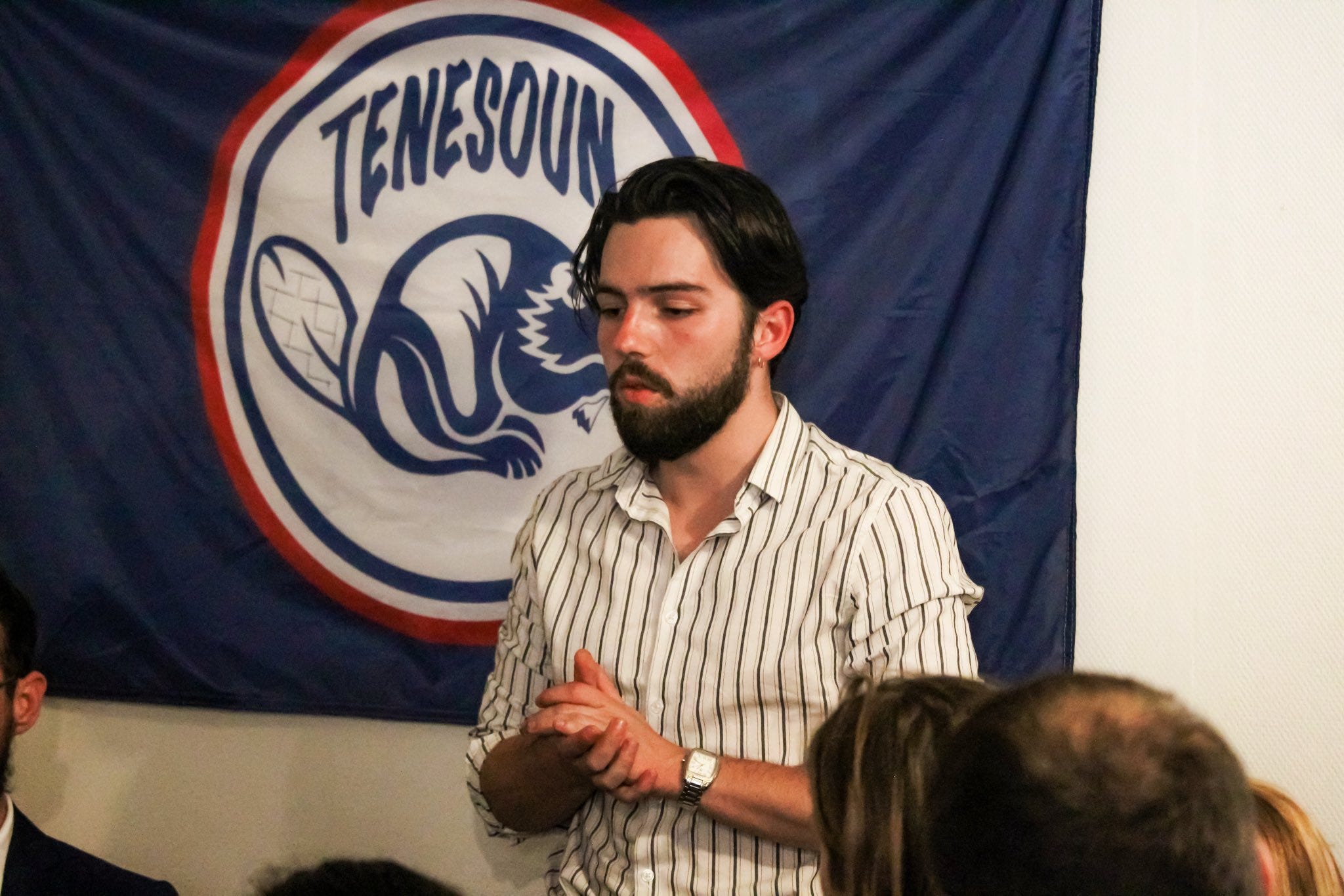
I joined Tenesoun around the age of nineteen, an identitarian organization where I quickly became a spokesperson. Through this activism, I met many people, including Quentin. Quentin’s death affected me deeply because, as I said in my speech at the tribute demonstration, I meet young people like Quentin every day. They are twenty-year-olds who, like me, refuse to accept the world’s ugliness, the status quo, and the prevailing apathy. Quentin represents a generation that has been sacrificed and that had to take action to defend its existence. Dominique Venner used to say: to exist is to fight against what denies you. Quentin was one of those who fought. Behind the individual, I see all of French and European youth who resemble him.
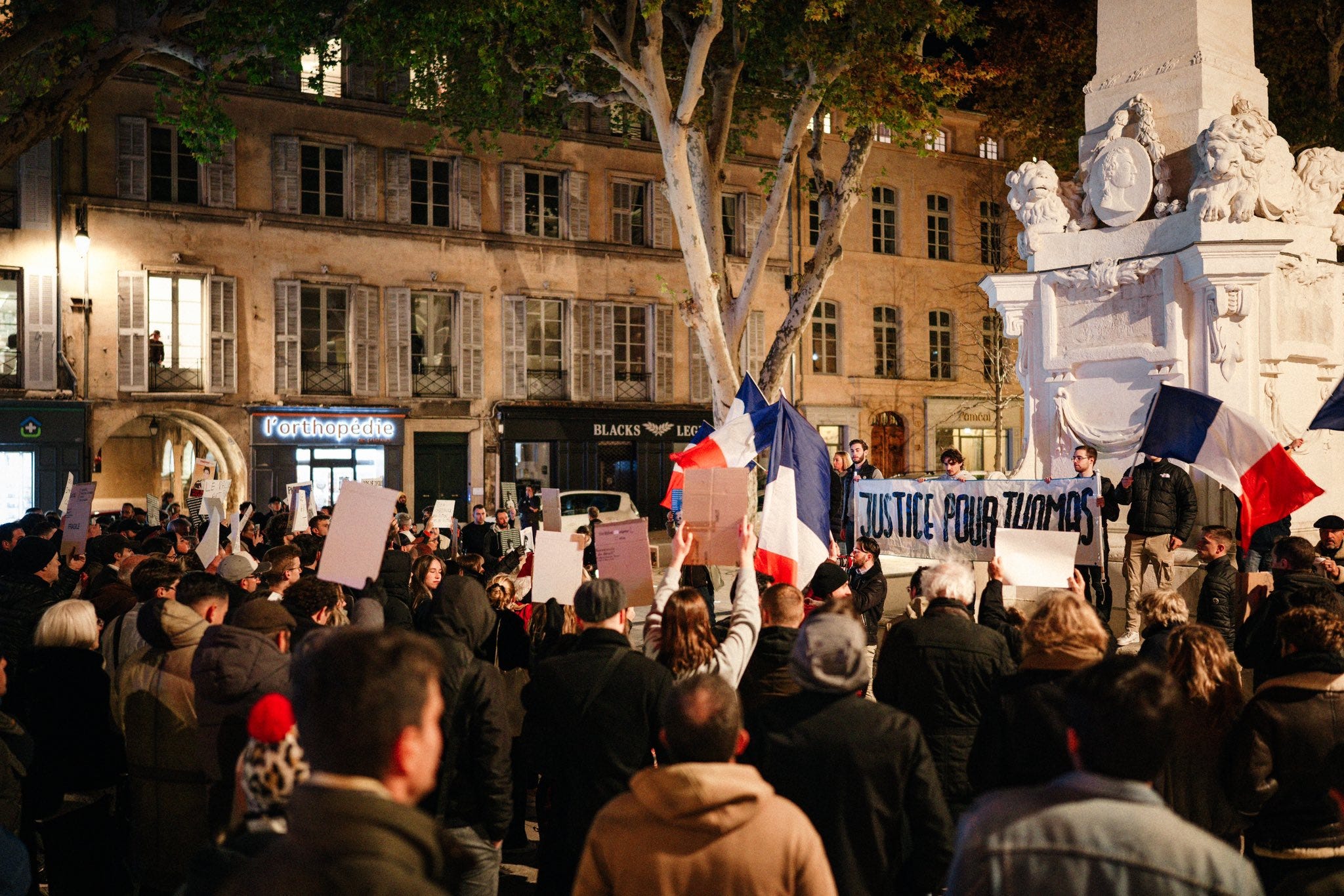
You are particularly active on the metapolitical level (networks, markets, conferences, memorials). How do you see its role in Provençal and European renewal, especially since February 12?
I tend to believe that there should be no distinction between politics and metapolitics. The actions of the identitarian movement are political by nature. Some would like to divide political action into that of intellectuals, in think tanks and activist identitarian structures—which they would call metapolitical—and that of institutional parties, which would be “truly” political. I do not believe that we are not doing politics. On the contrary: perhaps our approach—ideological, hyperactive, militant, total—is infinitely more political than that of the old party structures.
Make no mistake: I am not opposed to the idea of engaging in the electoral field. On the contrary! I even believe that our own structures, in the near future, will also aim to participate in elections, following the Maurrassian logic of “by all means, even legal ones.” I think that our work plays a crucial role in socializing the “right-wing France”: the Rassemblement National has a captive electorate that remains politically inactive between electoral cycles. I follow a different approach. In my view, seizing power is certainly central, but what is accomplished along the way is just as important. One does not govern a country simply by reaching its highest institution or holding the majority of parliamentary seats: one governs a country by having transformed its cultural imagination, by having deeply convinced its population, by having prepared in advance the path to power. Political action is that which aims at concrete societal change—not just electoral victory.
I therefore consider that our activity is sometimes more political than that of the parties, in that it helps create life around our ideals. Our movement is in turmoil. It is the movement that generates the climate from which patriotic elected officials later benefit.
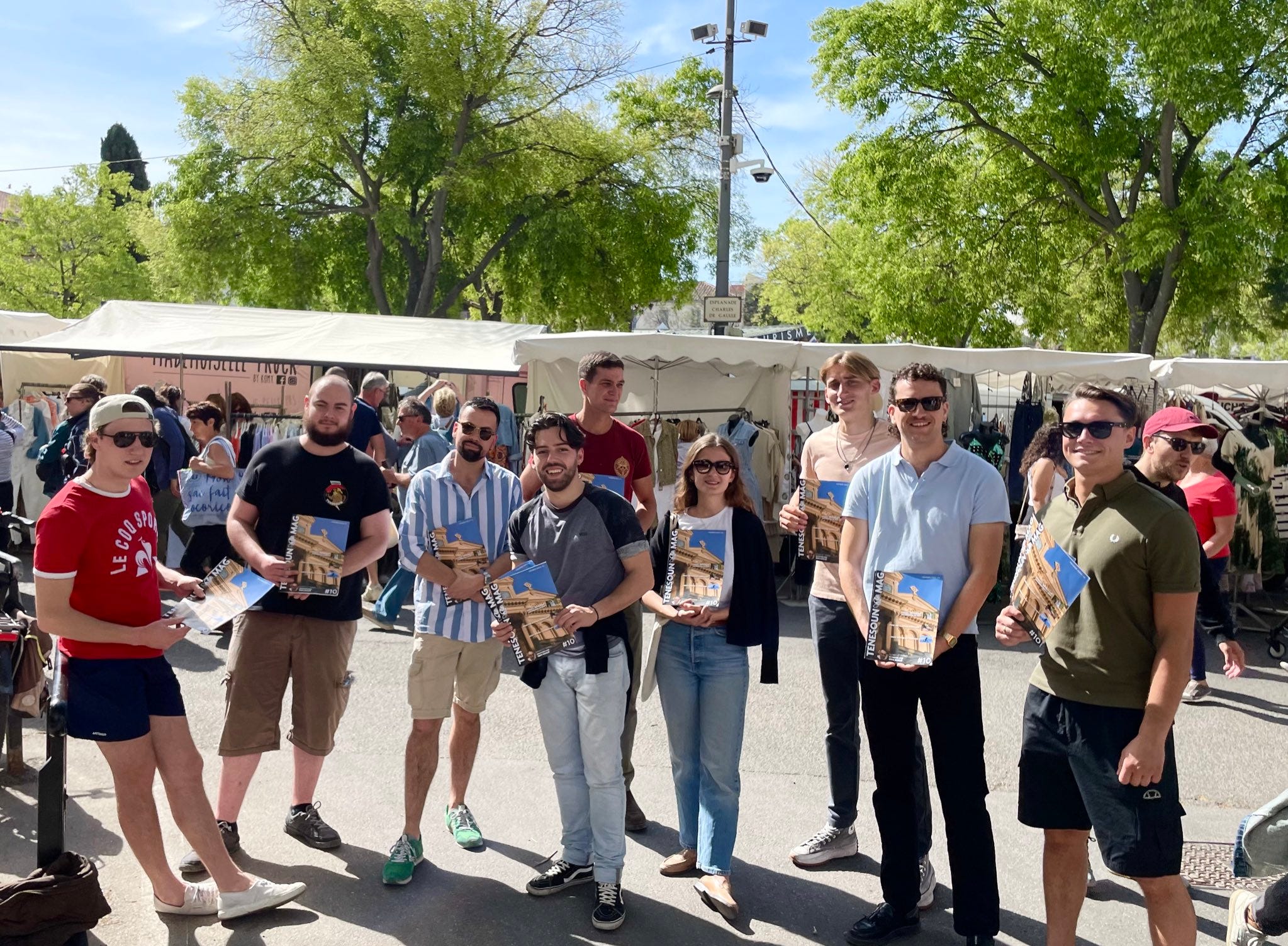
Tenesoun carries the motto “Build when everything collapses.” After the national tragedy surrounding Quentin, how do you envision the future of right-wing movements and European identity defense?
I believe that one of the side effects of Quentin’s tragic death has been to shine a light on the existence of our movement, which the general public largely ignored. Activist identitarian movements, spreading across France and Europe, express a dual purpose: to fight the replacement of European peoples, to refuse to let this state of affairs settle; and to engage in politics differently, in a more active, more concrete way. That is why these movements attract young people in large numbers! They are a hundred times more alive than the youth wings of conventional political parties will ever be.
Politicians love to obsess over this question: how do you get young people interested in politics? Step into an identitarian center, and you will see it—the youth genuinely interested in the world around them. Today, the identitarian movement is probably the political family with the youngest and most hyperactive social base there is. Initiatives are multiplying. Centers are opening nonstop. Conferences, demonstrations, media projects, and other initiatives are expanding exponentially. I believe our movement is a wave sweeping across everywhere. We are the face of the new Europe.
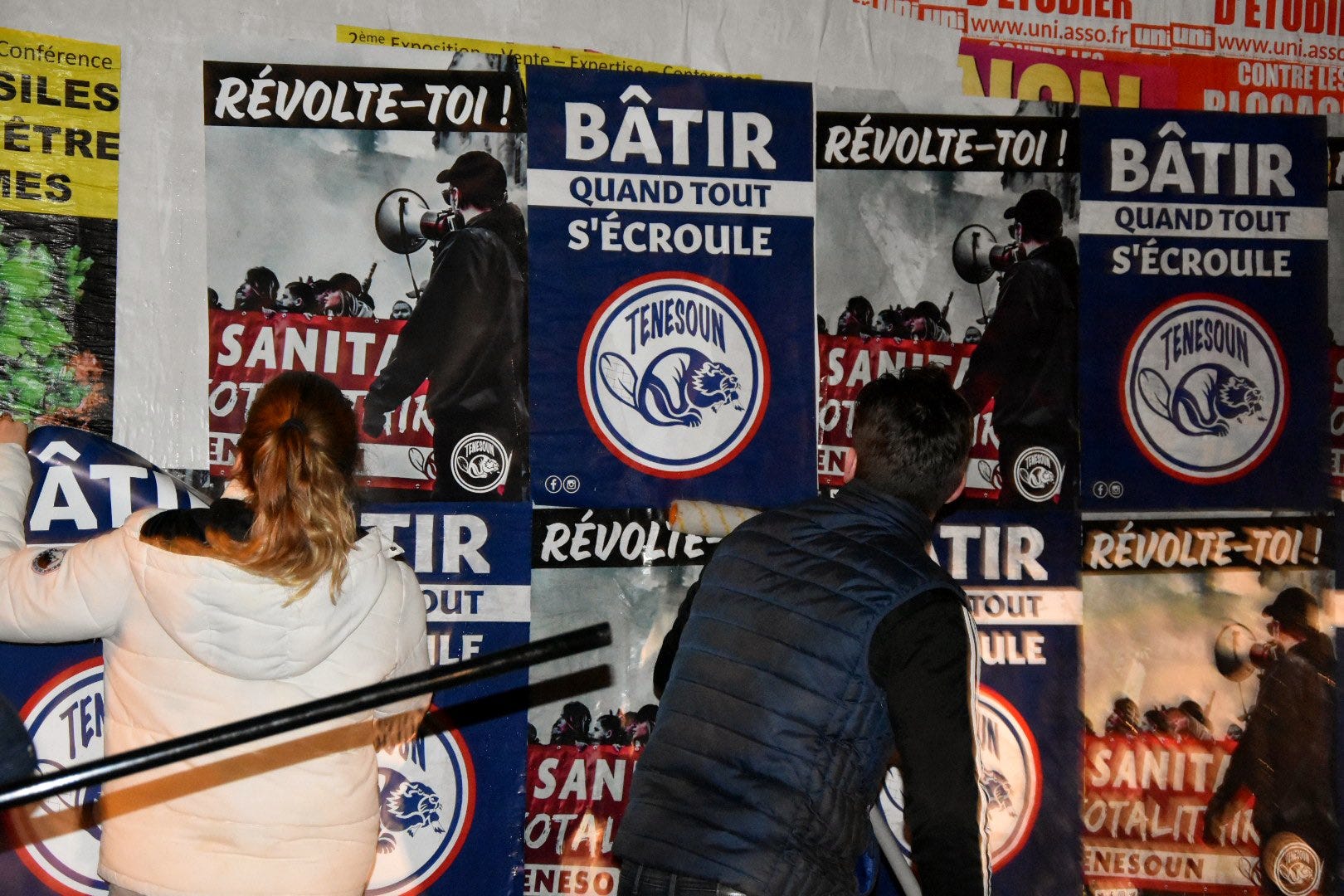
Quentin Deranque, 23, Catholic, mathematics student, died on February 14 following an assault on February 12. What does Quentin represent for you and your generation? What did you feel speaking in Lyon?
As I mentioned earlier, Quentin represents the archetype of a young person in their twenties—he was 23 at the time of his death—who refuses to tolerate the ugliness of the world or the status quo that our political elites want to impose. He was contrarian in every respect: Catholic in a desacralized era, engaged in an apolitical time, altruistic in a selfish age, determined in a lazy generation. Quentin embodies an entire youth: perhaps this is why his assassination resonated so strongly.
When I spoke in Lyon, I felt a deep surge of emotion. A sincere emotion, first of all, because I knew Quentin. I recalled our conversation over messages just a few hours before the speech. It left a strong mark on me. But I also felt the emotions of the crowd: a mix of grief, a healthy anger, and a will to act. Quentin was not apathetic—he lived, he lived fully through his commitments. I believe he leaves behind this message: never accept the prevailing cynicism. As Dylan Thomas’s poem says: “Don’t go gentle into that good night; rage, rage against the dying of the light.”
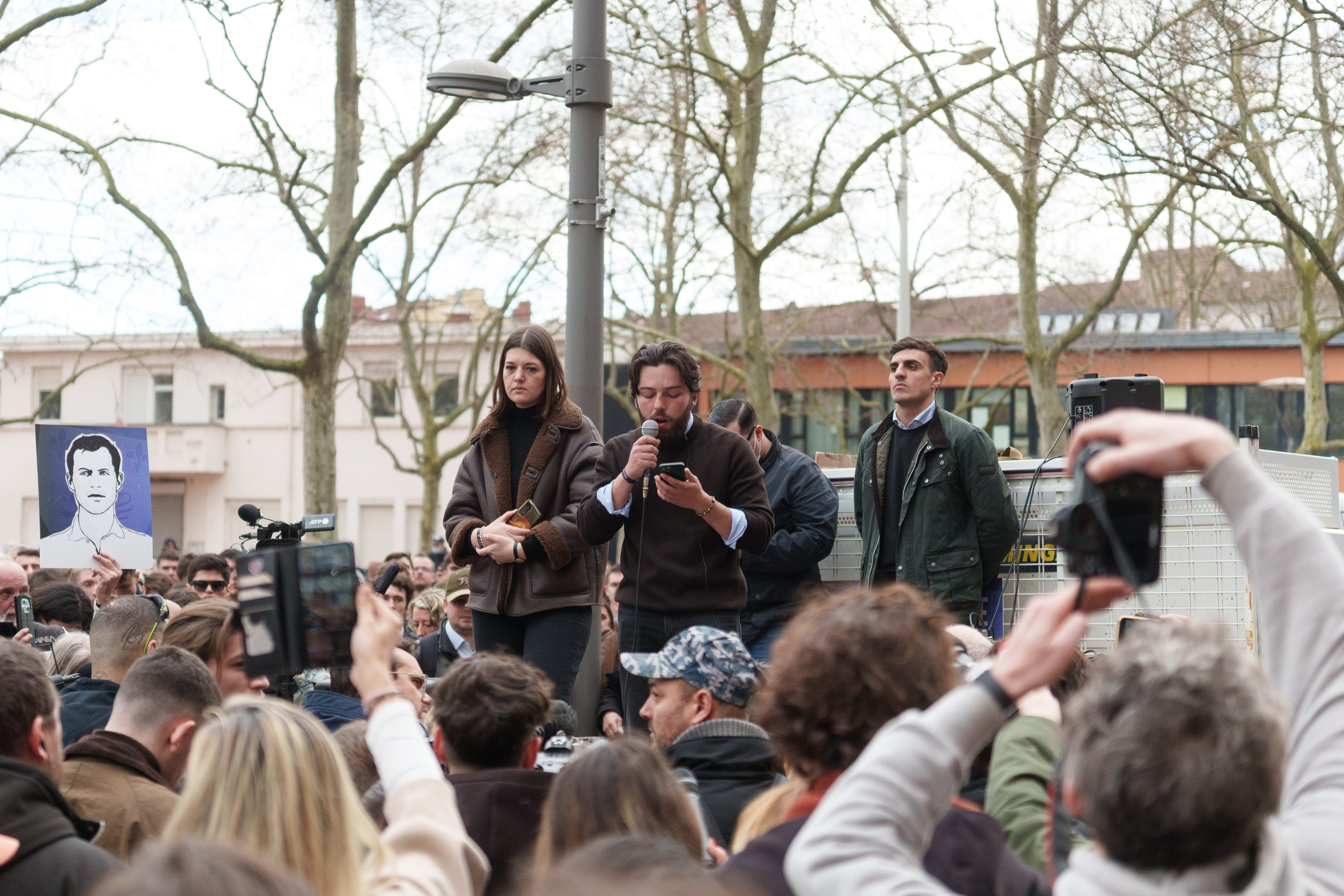
In Lyon, you called for a “sacred union” and declared “organize ourselves, by ourselves, for ourselves.” Why has this become central after Quentin’s death? What do you say to those who accuse you of radicalism?
Quentin was a nationalist and a Catholic activist. Portraying him as anything else, in my view, is a mistake. If the left killed Quentin, striking him on the head with such hatred, it is because they deeply despise what he represents: a nationalist Frenchman, identitarian, radical in his principles, devout. That is what they want to erase.
Consequently, when I say that we must organize ourselves by ourselves and for ourselves, it is because I believe that our political movement is a full-fledged tendency, one that the left fears. They fear it because they know it is effective, politically powerful. Quentin’s assassination is a political assassination: paying tribute to him is also about continuing the fight for which he gave his life. And that fight is the fight of our movement.
Our movement has its internal tendencies: in France, there are royalists, identitarians, national-revolutionaries. The tribute march reflected this diversity. It brought together all the tendencies of the radical right, but also voters of the Rassemblement National, sympathizers, families, Catholics. I believe all these people have more in common than they have differences. All my activism goes toward this goal: no tendency within our movement should “triumph” over another. We waste too much time on internal wars. We must unite, stand together, and establish ourselves as a true, coherent political tendency. This is a prerequisite for political effectiveness.
My encounter with Quentin reflected this spirit. I had met him along with a few activists from Action Française whom I contacted during a trip to Vienne. He was not an activist with them, just a sympathizer, and I am not a royalist. A few days later, he came to Provence, where we welcomed him. Quentin was heterodox in his commitments. Union reflects the nature of his struggle. I like this image: I feel comfortable among my people, whether with the most radical hooligans or with devout grandmothers from respectable families. I love all the faces of my people.
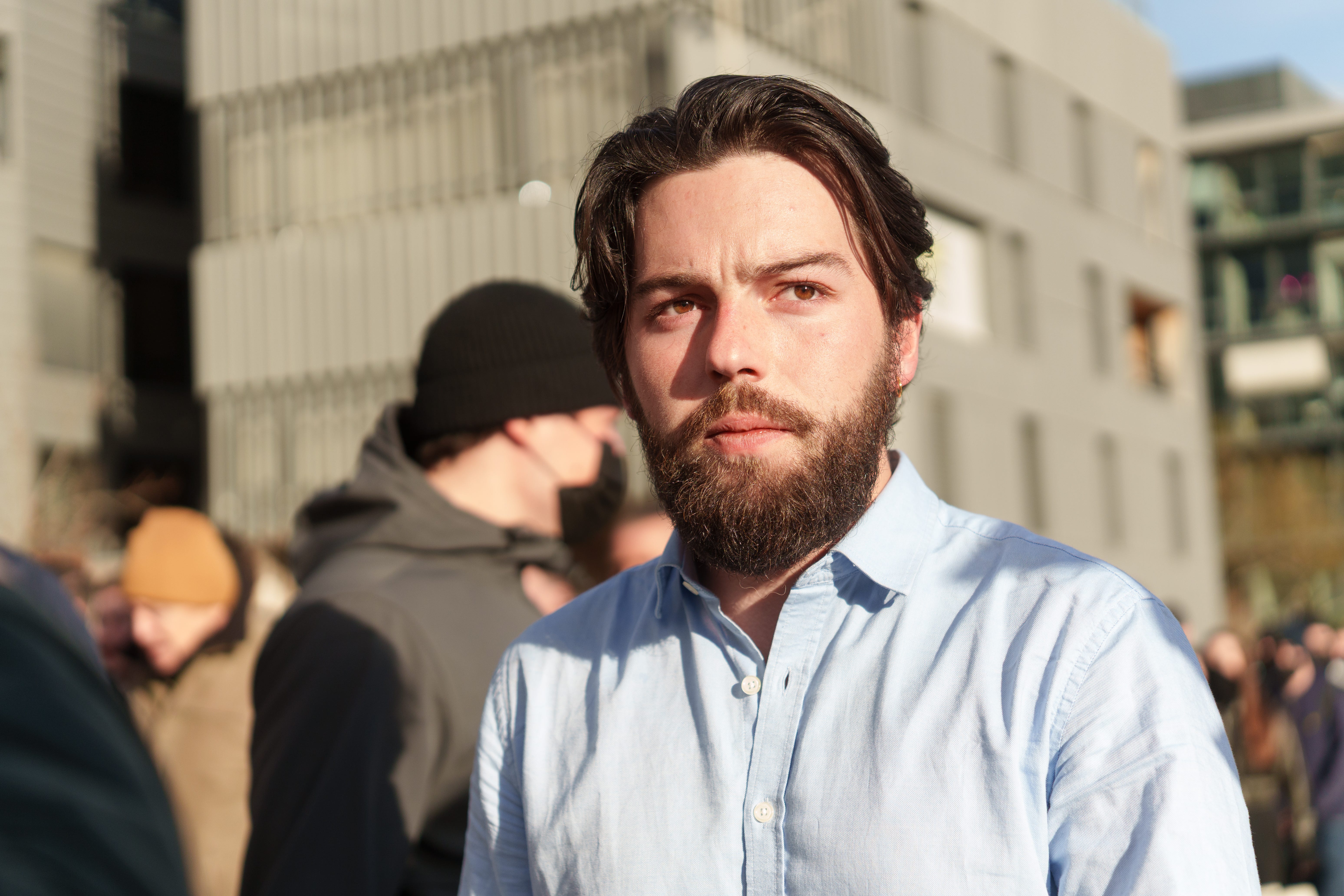
What concrete role must this youth now assume? And how does Tenesoun support them on the ground?
This youth must play the role of a spur. It must be incorruptible. People will say to them—and they are already saying it to us—“You’re not doing politics the right way.” I hate this prevailing cynicism! I do not believe that doing politics means compromising or seeking consensus. Doing politics means imposing an agenda. To impose ideas, you must not renounce them. You must insist, mobilize, push forward, and above all, be extremely patient. Imposing our slogans, existing, and enduring—that is the very DNA of Tenesoun and other movements of its kind.
If we institutionalize, we must do so only on the condition that we have a real influence on the political line of parties. I do not believe that entryism works—particularly in France, where the structure of the Rassemblement National is too vertical and rigid to have any real influence on the party line—nor do I think it is even relevant for us to join the RN system. We have more political influence outside than inside. But to make this external influence possible, we must give ourselves the means. To give ourselves the means, we must be professional: hire people, set up organizations, provide economic opportunities within the movement.
I love radicalism, but I love it when it is intelligent. A disorderly radical is useless. Radicalism must be disciplined—an old Leninist lesson.
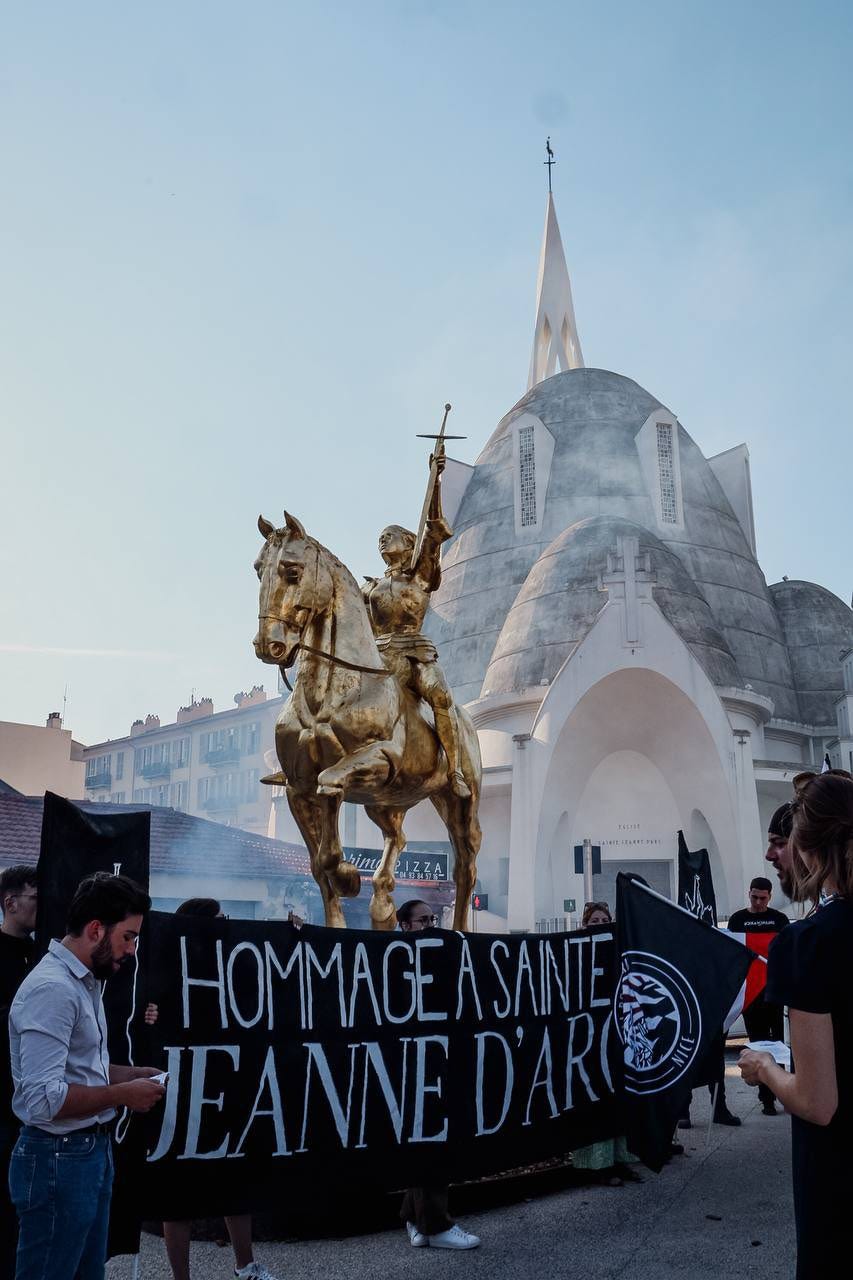
You organized multiple tributes in Aix, Nice, and Lyon. How do you explain the scale and diversity of the mobilization?
Regarding his diverse character, I believe that all the tendencies of the French radical right are embodied in Quentin, and in any case, the death of one of our own is such an urgent matter that it erases our differences. The scale of the mobilization is closely linked to the existence of the identitarian movement. It was not the Rassemblement National that called people into the streets and squares of this country, despite their substantial territorial network with deputies. It was the identitarian movements. We are a territorially rooted movement. Just a little while ago, I saw that a tribute is being organized in Mende, a small town in the depths of Lozère, driven by local identitarian activists. Who else but us is capable of doing politics in such remote territories? It is the existence of the movement that makes it possible to be everywhere, all the time.
You master both parliamentary and metapolitical codes. Which thinkers or currents have influenced you most, and how does Quentin embody this synthesis?
I am not very ideological—or rather, I dislike ideologism. I consider reality to be far too chaotic and flexible to lock oneself into doctrines, which would be like ready-made manuals for thinking, supposedly allowing us to analyze the world. If I am asked to define myself politically, I deliberately keep it broad: nationalist, identitarian, patriotic, Catholic—whatever.
This does not mean that I lack intellectual references or fixed opinions on certain key issues, such as the economy or ecology. But I defend the ability to adapt to the concrete realities of situations and circumstances. I do, however, believe in one thing: politics must be nourished by concrete material realities. We must start from the environment in order to analyze the world.
I am not a Marxist; my aspirations are anti-materialist, idealistic, and transcendental. I believe in eternity, the soul, the immaterial, the spiritual needs of humans, and the idea that it is not matter that drives the world, but something beyond us. I am largely influenced by the French New Right, José Antonio Primo de Rivera, Rousseau, Dominique Venner, Jérôme Fourquet, and Proudhon. I appreciate Saint-Just just as I appreciate virtuous French kings; I do not take a rigid stance on the form of government. I believe there are virtuous republics and decadent monarchies.
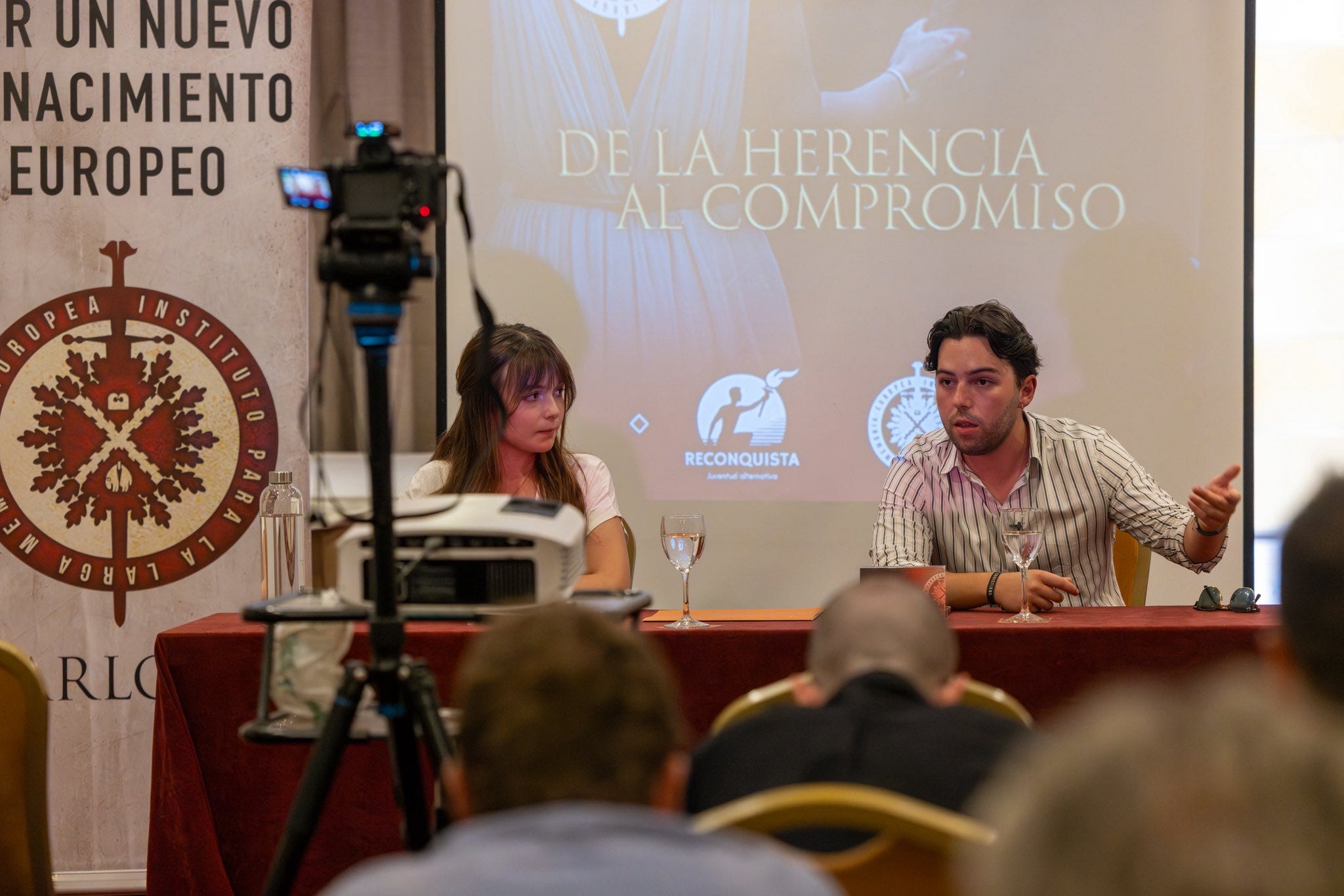
After Quentin’s death and the legal investigations connected to left-wing networks, what concrete measures do you propose for France and Europe regarding antifascist terrorism?
Institutionally, we call for the dissolution or banning of ANTIFA organizations, a measure that has been taken in a number of countries—such as the United States and Hungary. I believe that public authorities must examine the extent of antifascist networks and, above all, as we have seen in France, the complicity of certain authorities and political actors with them. How is it possible that the collaboration between the Jeune Garde and the Lyon city hall was so close, with municipal spaces being lent to the group ?
The left has infrastructures — NGOs, media, universities, militant networks. How should the European right build its metapolitical ecosystem? Should Quentin’s death be the trigger?
In my view, economic structures must first and foremost support political action. It is very good that our activists run businesses. In fact, it is vital for some, because for many of us, once you are demonized by the left and socially marginalized, you are forced to work for yourself. Financial independence allows us to have independent political action.
But we must be wary of a certain syndrome that sometimes appears within the movement: the tendency to drift away from political action as one builds a profitable economic activity. This is a dead-end path that some take, and it can be problematic. We are, above all, political movements. Our movements must be true ecosystems. Several Tenesoun activists currently work in, with, or thanks to the resources that political activity provides.
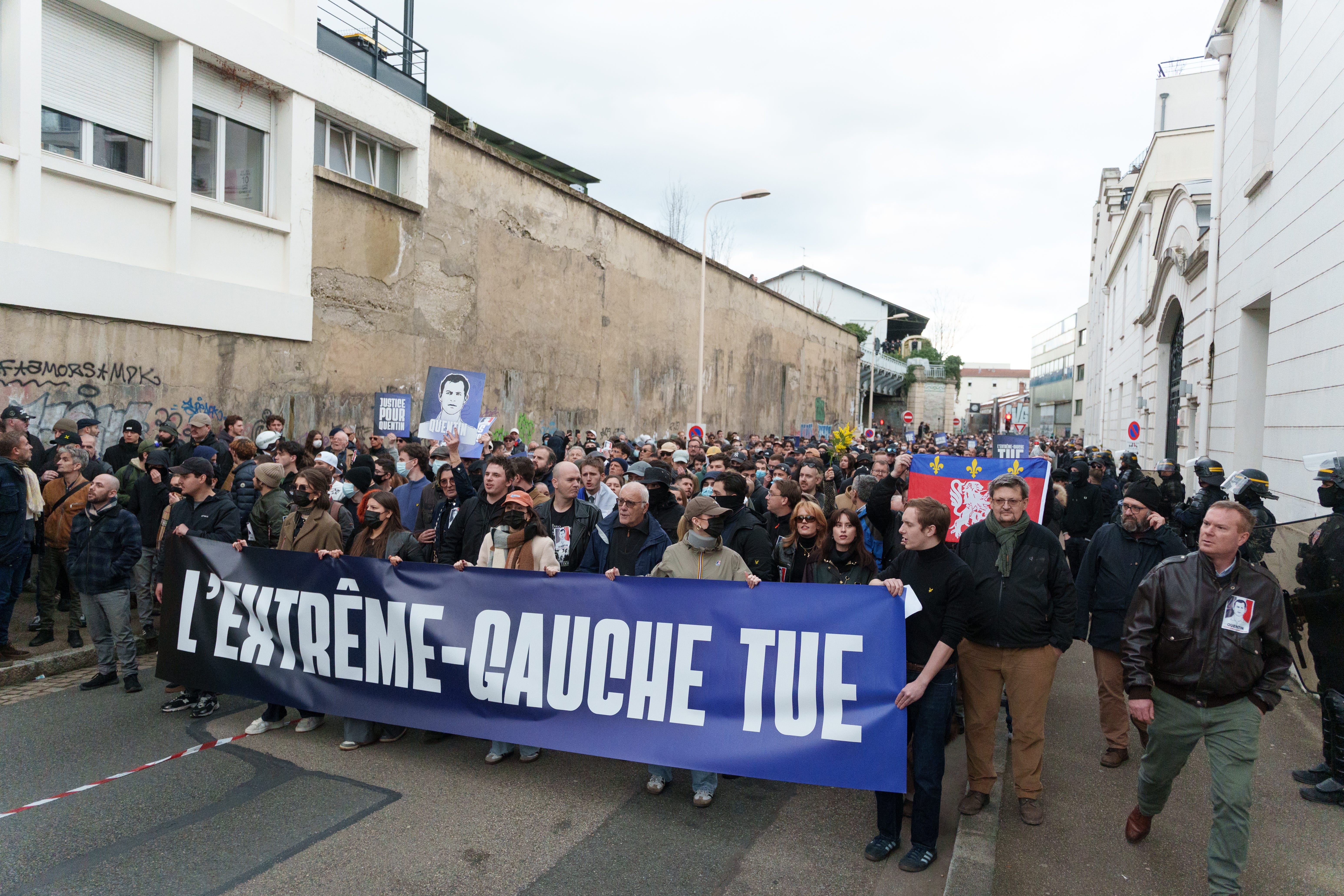
Following Quentin’s death, institutional right-wing parties maintained their strategy of normalization. Are they still useful, or are they betraying their base?
The Rassemblement National decided not to attend the tributes for Quentin and even went so far as to cancel their own, in Avignon—the constituency of Raphaël Arnault, the leader of the Jeune Garde. It is dramatic, but it does not surprise me. I remember that the RN had organized a demonstration for the condemnation of Marine Le Pen, gathering barely 5,000 people in Paris. Five thousand people, not counting the roughly 120 RN deputies, with their three parliamentary assistants each, while also bringing buses from all the federations. The failure of that demonstration comes down to one simple fact: the RN refuses to socialize its electorate. It does not make them politically active year-round. This is a break from its history during the FN era.
Old militants from Aix-en-Provence told me that in the 1990s, the FN had two local offices and an intellectual journal in Aix-en-Provence. France no longer has a “militant party,” meaning totalitarian in the sense that it is active in all areas of life, as the French Communist Party once was. When my grandmother tells me about her communist youth, it makes me smile: she went to see Soviet films on the Canebière in the Party’s cinema, joined the communist scouts, traveled to the GDR at the end of her studies, and lived the life of the party all day long, in every aspect of her existence. We read and consumed communist culture. Without going to Bolshevik extremes, I believe it is crucial that a party is more than just a ballot in a box. A party must create life around it.
Contrary to common belief, I do not condemn “de-demonization.” I understand that the RN must achieve 50+1. Granted: our paths are not the same. An identitarian is not meant to join the RN. It serves no purpose. We must be able to organize ourselves, by ourselves—because it is essential. The RN will come to power in this country at some point. We must be sufficiently organized and powerful outside of it at that moment to influence its line. Otherwise, it will govern poorly. The difference between them and us is that they are subject to the dictatorship of public opinion. We, on the other hand, advance our agenda and grow less marginal every day.
One single motto: prepare for the times ahead.
What is your vision of tomorrow’s Europe?
I believe that my generation—my identitarian generation—will continue doing what it does while integrating into society. Today’s twenty-year-old activists will tomorrow be lawyers, civil servants, prominent figures, influencers, entrepreneurs. The goal is simple: keep your radicalism and climb the social ladder, organize yourselves to better steer society in our direction tomorrow.
I believe that each of us is individually destined for an important political role in the issues that will shake Europe in five or ten years. Our radicalism is not an obstacle; on the contrary, it is an asset. The Overton window shifts every day. People like us will tomorrow be deputies or ministers. Europe will bear our face—the face of this radical, cheerful, smiling youth that has not compromised its ideals. Our refusal of cynicism will be rewarded; today’s insults will become tomorrow’s honors.

Radicalism is often demonized, yet you embrace it openly. How do you distinguish constructive radicalism from sterile radicalism?
Constructive radicalism is disciplined, professional, and strategic. Too many institutional figures confuse radicalism with political inefficiency. The problem is not who we are, because in fact, we are relatively normal—twenty-somethings who refuse to accept the madness of the world. And we are healthy: socially, individually, morally.
I believe the problem lies in our lack of method, coherence, and unity in action. That is something that is changing. You must set a point, a goal, fix your eyes on it, never let it go, and move toward it without stopping. Stay faithful to principles, and let our ideas grow as we grow as men and women. Most of us are twenty years old—the world of tomorrow belongs to us.
Final message to readers — what is the motto for the generation that refuses to kneel?
“I know that by striking the same nail repeatedly, one can bring down a house. History provides us with examples: refusal has always played a crucial role. Saints, hermits, but also intellectuals—the few people who made history—are those who said no, not the courtiers and the cardinals’ lackeys. To be effective, refusal must be total.” (Pier Paolo Pasolini)
I do not believe in “wisdom”: I think we are closer to the truth at twenty, when our eyes shine, our faces are young, and we are uncorrupted, than at forty, when life has caught up with us and made us forget the ideals of our youth. They confuse radicalism with integrity. We will win because our cause is just.
Voxeuropa Herald is an initiative that shares the voices shaping Europe today: elected officials, essayists, philosophers, activists, artists and influencers. These portraits are collective responses to the crises shaking our Europe. Faced with the major upheavals of our times, Voxeuropa Herald gives a voice to those who, throughout Europe, share solutions and visions for the future. The message is clear : European realities call for European responses.
🔹 Follow Voxeuropa on : X | Instagram | Telegram |
🔹 To support us - Paypal
🔹 Share, comment, and debate — ideas gain power when they circulate.
Brilliant. We’re completely in sync, the future belongs to us.