


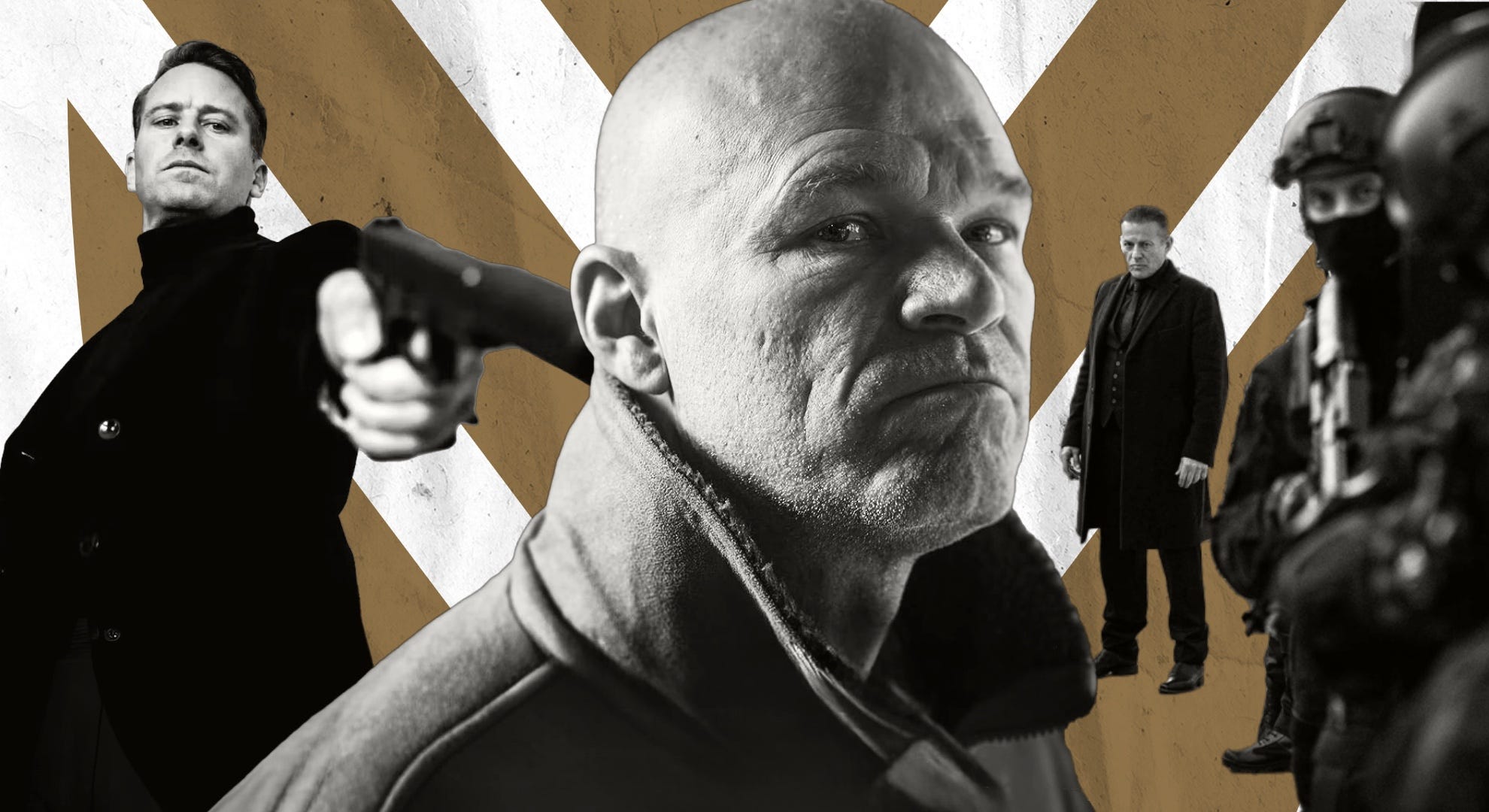
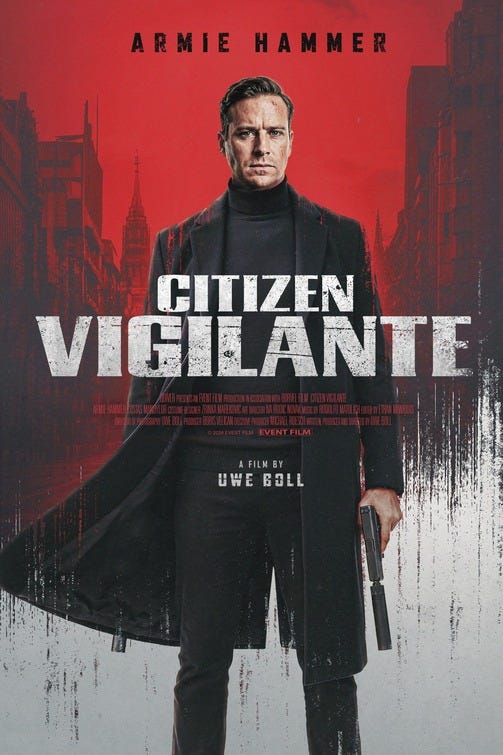
Today, Uwe Boll is making one of the most spectacular comebacks in European independent cinema. Citizen Vigilante, his latest feature film, has climbed to number one on Amazon’s sales charts in the United States, without a Hollywood studio, without a traditional distributor, driven almost entirely by social media and alternative media.
From the closure of his German restaurant in Vancouver to this unexpected success, the German director’s journey illustrates a broader shift: that of socially conscious cinema finally finding, outside traditional channels, the audience that had previously been denied to it. Following Run, an unflinching portrait of clandestine crossings of the Mediterranean, Citizen Vigilante confirms that a filmmaker can still tackle head-on the subjects the industry avoids, and be rewarded for it
1. In 2015 you opened the Bauhaus restaurant in Vancouver and stepped away from filmmaking. What brought you back to making movies?
When Blockbuster Video died, around 2014, I thought I would never make money making movies again. I missed German food in Vancouver, so I opened the high-end restaurant Bauhaus. Around 2020 I got bored and my drive to make films again started. Then Covid came and we had to close the restaurant, that was the sign for me to start making movies again.
2. Across films like Auschwitz, Hanau, Rampage and Assault on Wall Street, what is the real project behind your work?
All my personal, self-written films are about real situations, and they are political: Auschwitz, Hanau, Barschel: Mord in Genf, Rampage, Postal, Darfur, Assault on Wall Street, Stoic, Heart of America, Tunnel Rats, Run, Citizen Vigilante. My project is to be what Oliver Stone was thirty-five years ago.
3. Run follows African migrants crossing the Mediterranean to Italy. What was your intention with that film?
Run has great actors, Amanda Plummer, Ulrich Thomsen, James Russo, and it shows that boat migration via smugglers turns into a lose-lose situation for everybody involved. In the film I focus on various people, like a montage, over one day on the island, leading to a bloodbath.
4. How does Citizen Vigilante relate to Run?
People who watch Citizen Vigilante should watch Run as well, because they are different views of the same subject, different stories. Run shows the arrival into a country, Citizen Vigilante shows what happens when migration doesn’t work.
5. Citizen Vigilante was denied a rating by the FSK. How did that process unfold?
The FSK has around 200 people on file who come in to rate movies, mostly from government organisations, churches, unions, and so on. Eighteen people watch a film and then rate it. Only in Germany can you get “KK,” no rating, which means the film isn’t banned, but nobody will list it or stream it. We’re now making a third and final attempt, and we’ll screen it again.
6. What led you from the 2016 Hamburg case to making this film?
The Stadtpark case was only one among many I saw, watched, and followed over the years. I studied crime statistics, and at one point I felt I needed to make a film showing that if we don’t get a grip on this, everything will go to shit.
7. The film was shared for free on X by Elon Musk. Was that distribution planned, or a response to the ban?
A response. A PR action, to give people the chance to see it.
8. You’ve made a film about Auschwitz. How do you respond to being called a Nazi for your political positions?
I made a movie about Auschwitz. I wrote even on university stuff about the Nazis and everything. So to say if somebody says I don’t want Islamistic crazy people in the country, or people that suck out the social welfare system, if you’re in a Nazi, that’s crazy. By the way only, you have to protect the Jews in the country, and you’re not doing that and letting too many Islamistic people into a country.
9. Where do you draw the line on showing violence on screen?
I always evaluate, look, I like drama movies, Taxi Driver, whatever, I like violent films, existential films, so the violence, I’m not like sceptical about showing violence. I debate what is the story I wanna tell and how I do this, and a lot of my movies, Tower Heist, Rampage, Assault of Wall Street, they are about violent subject matters, wars, etc, and I tried to show it how it is. We say you eat what you like, if you don’t like movies like this, you don’t watch it. If I don’t like Supergirl, and I don’t like Supergirl, I don’t watch it. So if you only want fairy tale movies, you watch only fairy tale movies. But you cannot disallow movies, they heart hitting political.
10. You cast Armie Hammer right after he’d been cancelled. Why?
No, I mean, I said like Armie Hammer was available, didn’t cost a few million bucks anymore, because he was cancelled, and so I hired him, got him cheap, great actor, performed, now he will be a star again. I mean, it’s in a way very simple.
11. Your films span school shootings, financial corruption, the Holocaust and the migration crisis. What ties them together?
I did a lot of movies about corruption, or people taking the law in their own hands, or abusing situations, tunnel rats of Vietnam War, stoic prison, problems, Auschwitz about the Holocaust, heart of America was Elizabeth Moss about school violence, my first, one of my first was Barschel murder in Geneva about a dead prime minister in Germany, Hanau about the shooting here in Frankfurt, close where I live. So I do subject matters that are interesting for me, and for me movies need to go about life and death.
12. How important are independent media like Voxeuropa Herald for distributing work that mainstream channels won’t touch?
I think that movie is only visible and a success because of social media, social media and other alternative, more online news outlets. They’re reflecting that the people are not willing anymore to just believe only the old media, the main TV channels, or the main magazines in Germany or worldwide. And so I think this more independent media, or individual media, or social media, or podcast online, bringing an extra element to the table, an important element to the table. And we are as of today the No. 1 movie on Amazon in the US, and that without any marketing budget, just because of social media.
Voxeuropa Herald is an initiative that shares the voices shaping Europe today: elected officials, essayists, philosophers, activists, artists and influencers. These portraits are collective responses to the crises shaking our Europe. Faced with the major upheavals of our times, Voxeuropa Herald gives a voice to those who, throughout Europe, share solutions and visions for the future. The message is clear : European realities call for European responses.
🔹 Follow Voxeuropa on : X | Instagram | Telegram |
🔹 To support us - Paypal
🔹 Share, comment, and debate — ideas gain power when they circulate.